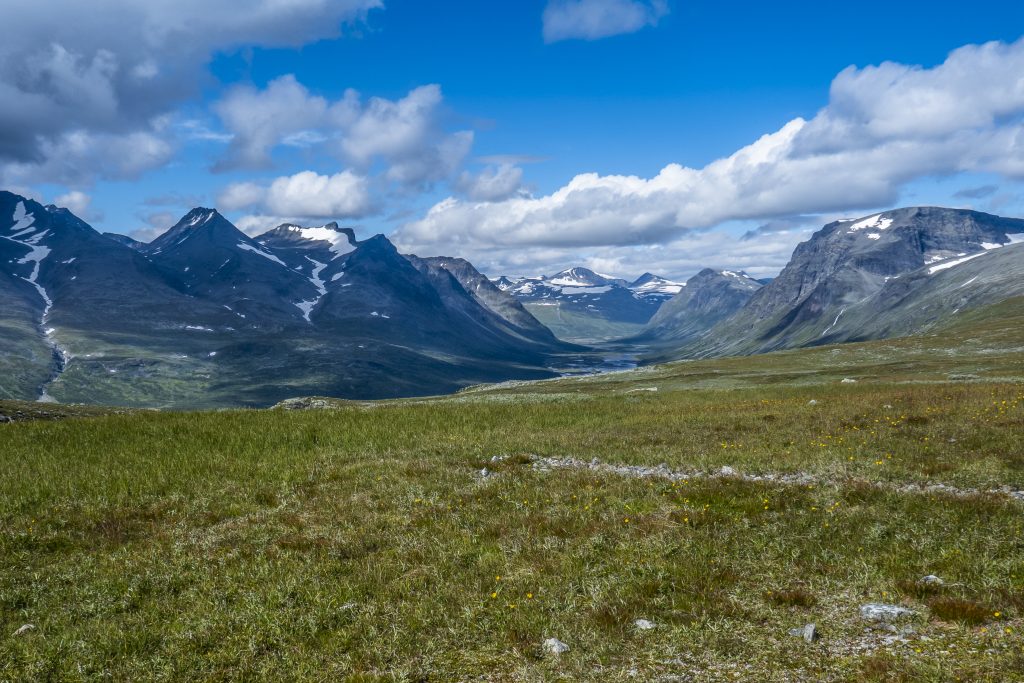
Sarek – The last wilderness
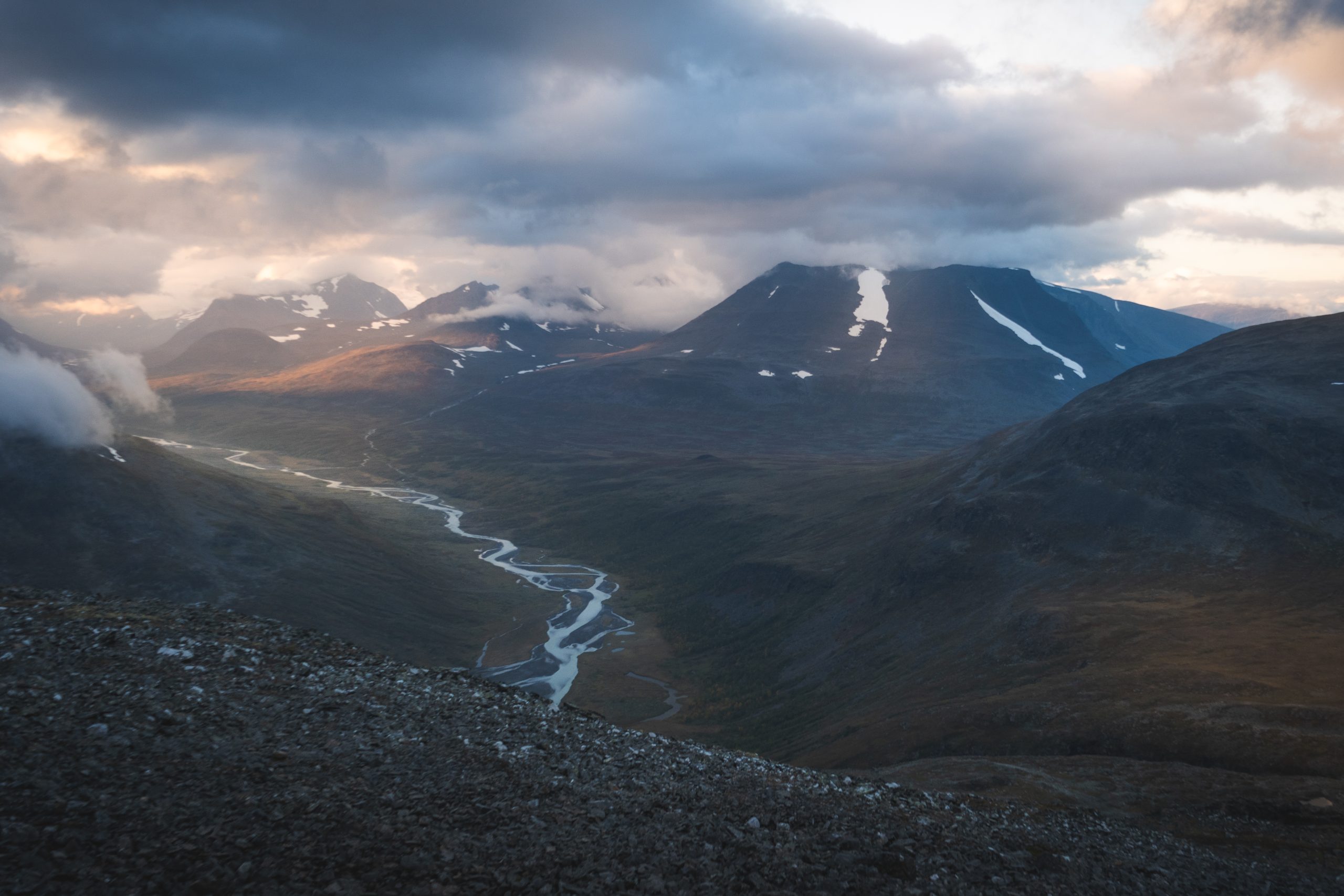
Sarek – The last wilderness
Sarek – The last wilderness
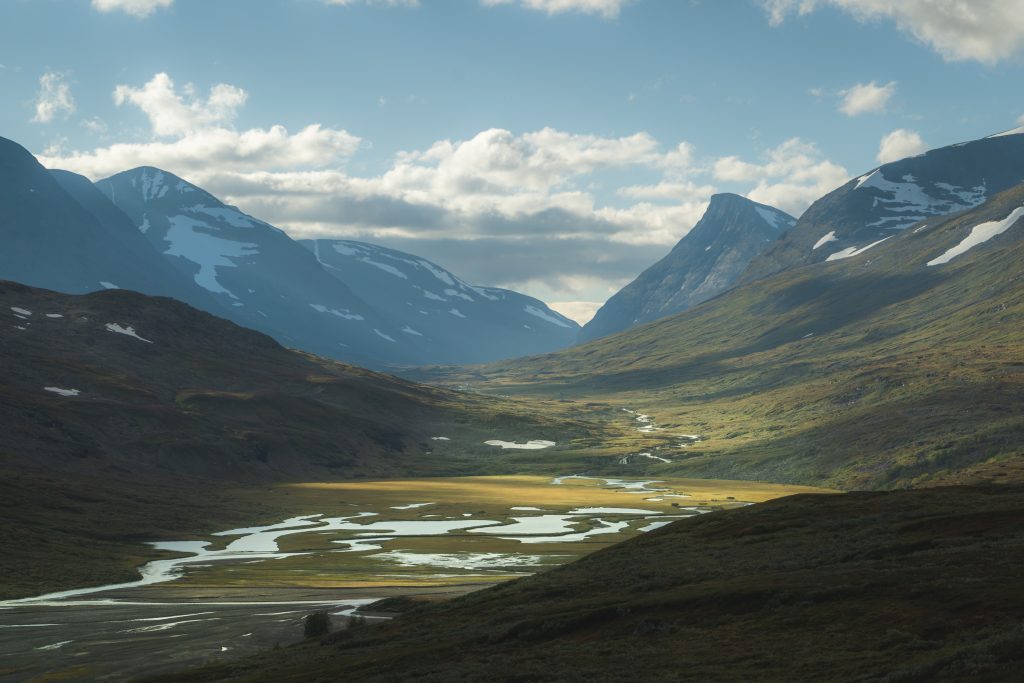
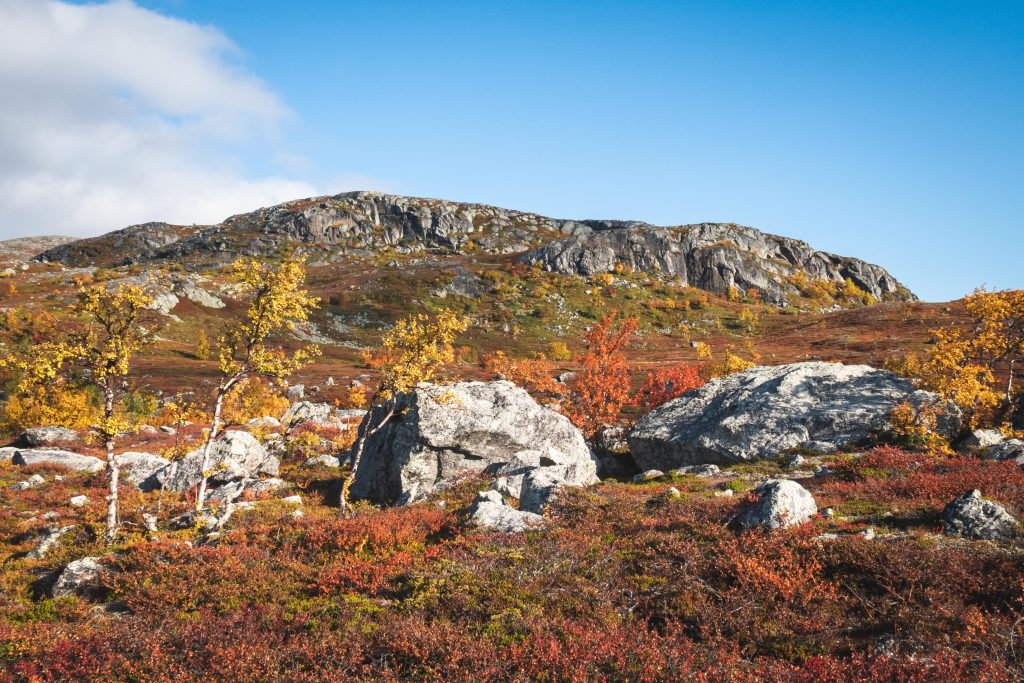
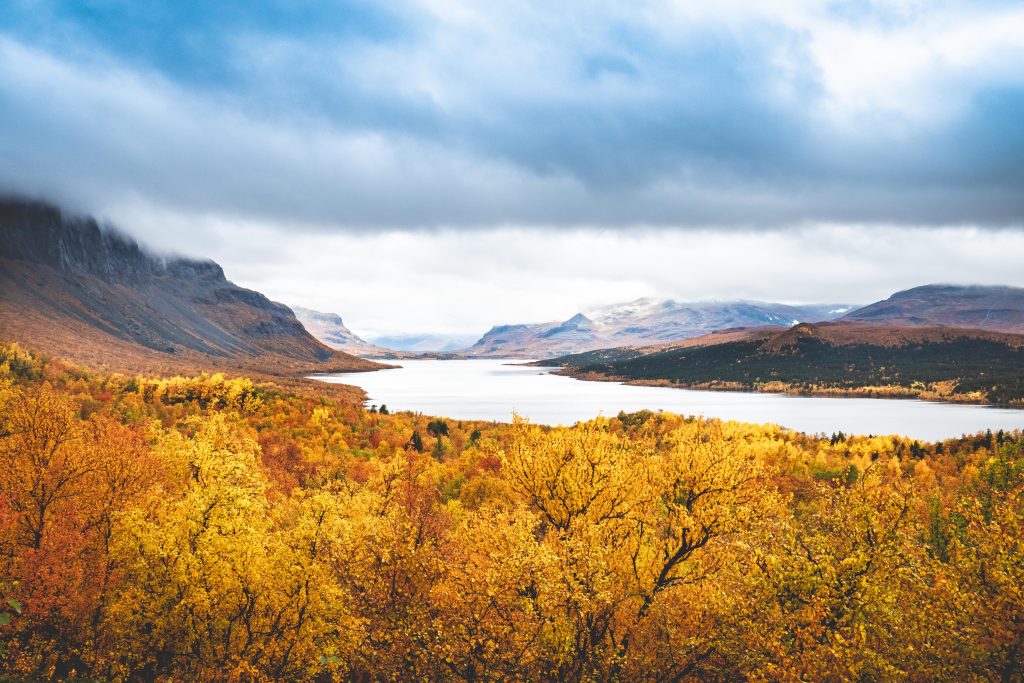
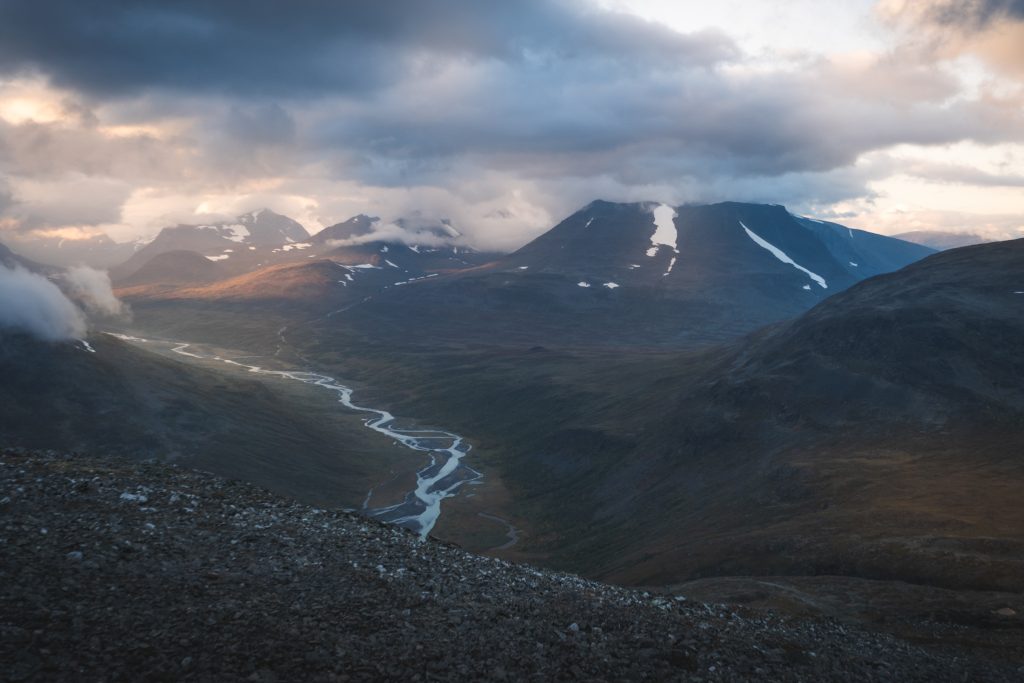
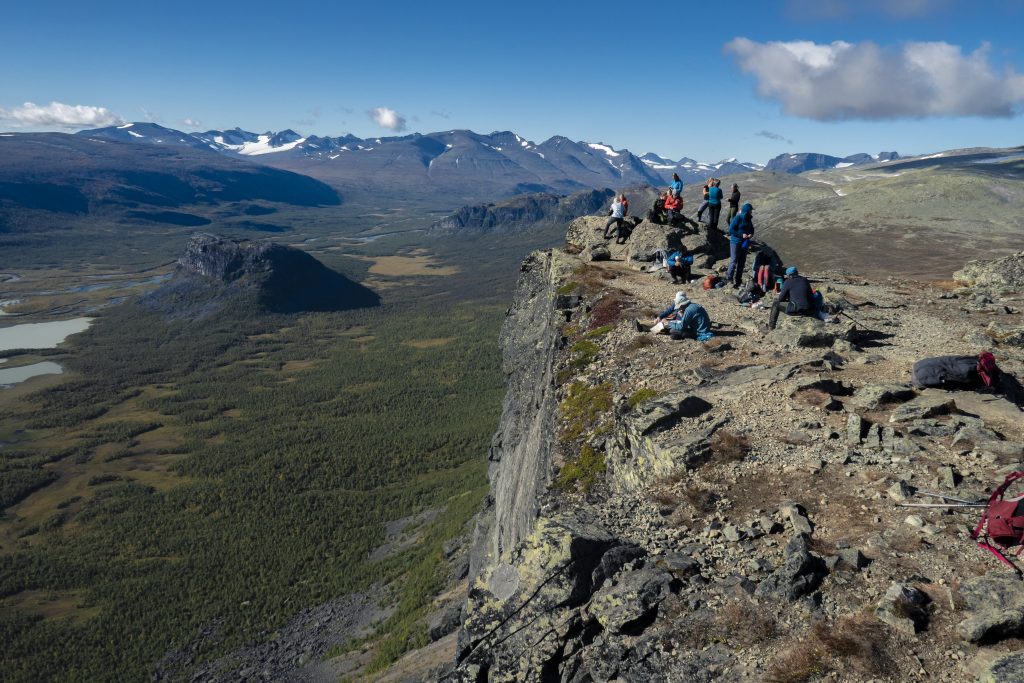
This is Sarek. The name and place is legend, a mountain area that has long had a special place in the Nordic mountain tradition. It is known for its wildness, its great distances and its stillness. In the middle of the World Heritage Site, we move through a landscape where nature still sets the conditions, and where the days are shaped by weather, terrain and the rhythm of the group. You will be above glaciers, and below dense vegetation. You’re going to get tired of marshland, and you’ll love yourself because you came here. During the week we work methodically with pace, route selection and camp sites. Margins are part of the planning and you get to experience how a longer trip in real wilderness works in practice.
The whole creates something that is difficult to experience anywhere else in the mountains: a sense of coherence and presence that emerges day by day. During the trip you will learn navigation, mountain safety and the practical skills needed to conduct a sustainable expedition of this kind. The goal is not performance or prestige, but an understanding of how the mountain works, and how you work on your own. When we leave Sarek, you have not only conducted a hike, but gained experiences that make future adventures more independent and less insecure. The mountains are no smaller, and nature feels closer.
Dates: 5-11 September 2026
Price: 16 500 kr SEK
Start: Ritsem
Finish: Saltoluokta
Fully booked? Dates not working out?
Signup for the waitinglist!
For whom? This expedition is suitable for those who have already started hiking in the mountains and want to take the next step towards longer trips with more independence. You do not need previous expedition experience, but you are curious to be out several days in a row and want to develop your security in a mountain environment. The pace is calm and thoughtful, with margins for weather and recovery. The focus is on learning, experience and giving space to really be in the landscape, not on achievement. Above all, this is an opportunity to experience Sarek from your conditions and with time to breathe and reflect.
Common questions before booking
What happens if I have to cancel?
– If it is more than 60 days before activity, you only pay the deposit of 1500 SEK. Read the booking conditions here
I don’t have equipment, what should I do?
– I always recommend Outdoorbuddies to rent equipment, they have a good selection. I also live next door to them and can therefore help with logistics and other mediation if needed. If you want to buy equipment, I am available for consultation and advice!
I’m not sure if I’m properly prepared, how can I tell?
– Book an appointment for consultation and we will look at the appropriate activity for your needs, we try to be flexible and adaptable to our common goals, everyone should feel welcome!
What happens if the weather is bad in luck or ahead of a trip?
If the weather is so bad that it risks our security, we primarily change the route to better alternatives or adjust timeframes etc. However, weather is part of staying in the mountains so this is something you need to take into account. The last resort is cancellation of the trip but it would take a lot. In that case, it will be rescheduled to another date after dialogue with you.
Can I book a private tour? (1-2 guests)
– Absolutely! Write to info@fjallkloka.se for a quote.
What happens if I miss the start time of the tour?
– This depends entirely on what activity it is but it is the guest’s responsibility to arrive on time and we can not wait so no refund can be made. But let us know well in advance and we will try to solve it as best we can.
Trip itinerary
Before trip
– Digital pre-trip meeting scheduled for end of July
– Unlimited mailsupport
Day 1
Ritsem. It is the place where our journey begins and here we will meet at 12:30 for introduction, presentations and review of the tour with safety frames. Then we board MS Storlule and 40 minutes later we are in Änonjalme where our hike begins. This is an old Sami settlement overlooking the first mountain we pass: Lapland’s Queen, Ahkka.
Ahkka is a large mountain massif with several individual summits and the mountain will dominate our views for a full 2 days and also into day 3. Today, the focus is on creating cohesion in the group and a team spirit that we establish early. After a short break in the STF ahkkastugorna, we follow the trail west, over the mighty Vuojatädno. We walk through reindeer pasture and once above the treeline, it becomes clear how important this place is for reindeer husbandry historically and present. We are approaching the Trepark meeting, the point where Laponias 3 of 4 national parks meet, Stora Sjöfallet, Padjelanta & Sarek.
Our path is lined with dwarf birch, mountain birch and one and a few Rosenrot if we are lucky. The landscape is exposed and the birches crooked by wind and snow. Before we reach our first camp site, we cross over the famous Sjnjuvtjudisjåhh, “River where the swans land”.
Day 2
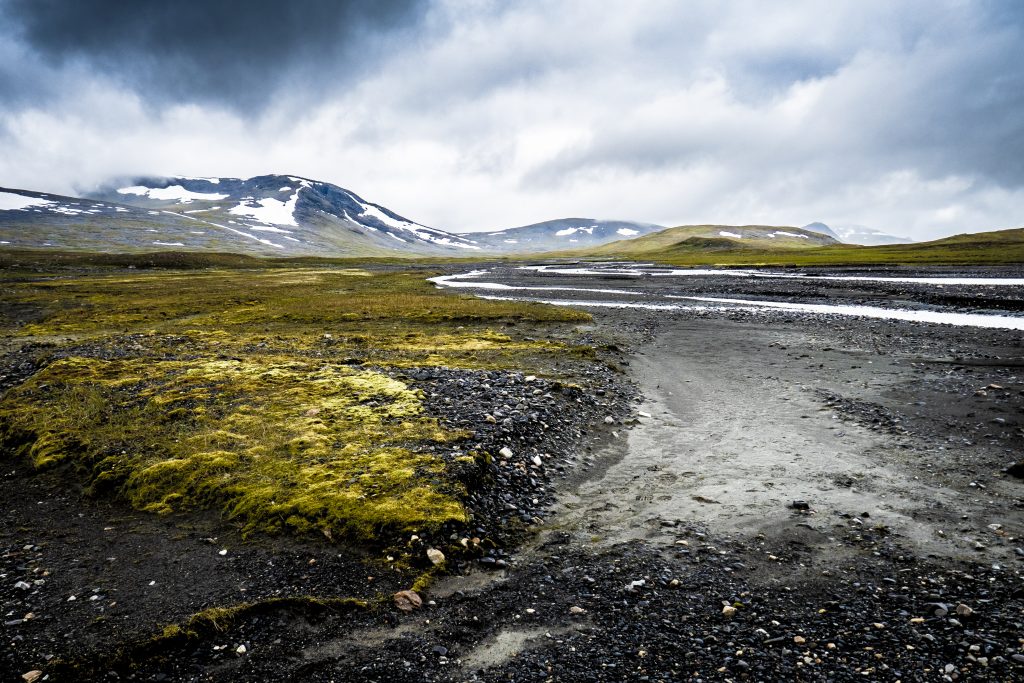
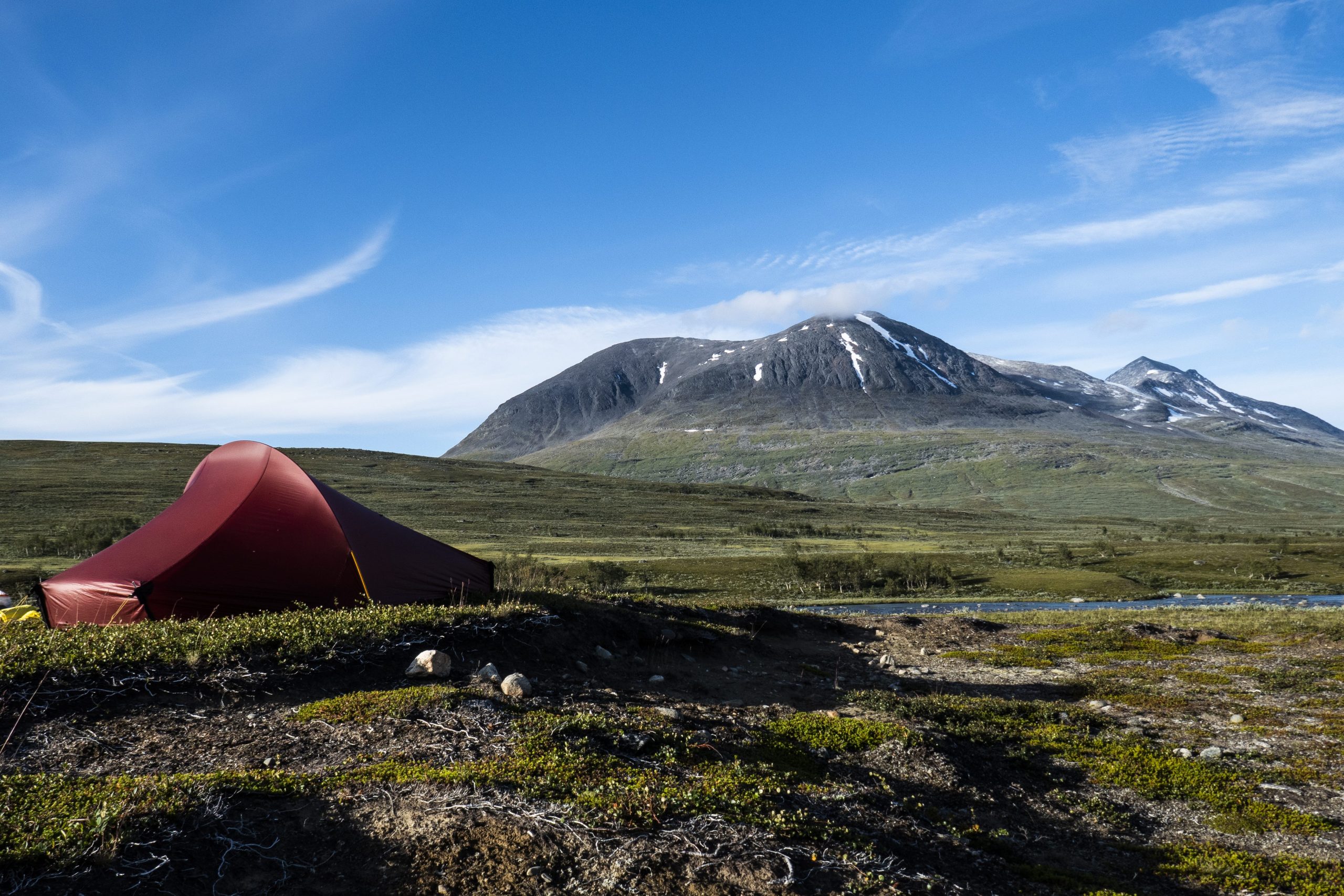
The day begins with great anticipation as we step into Sarek National Park just a few meters from the camp after breakfast! But first we have a morning meeting and go through today’s agenda, and the group’s status, as well as what we need to think about with today’s weather and the terrain ahead of us. The landscape during the day gets wetter as we now hike off trail and at the same time more exposed when we are above the tree line.
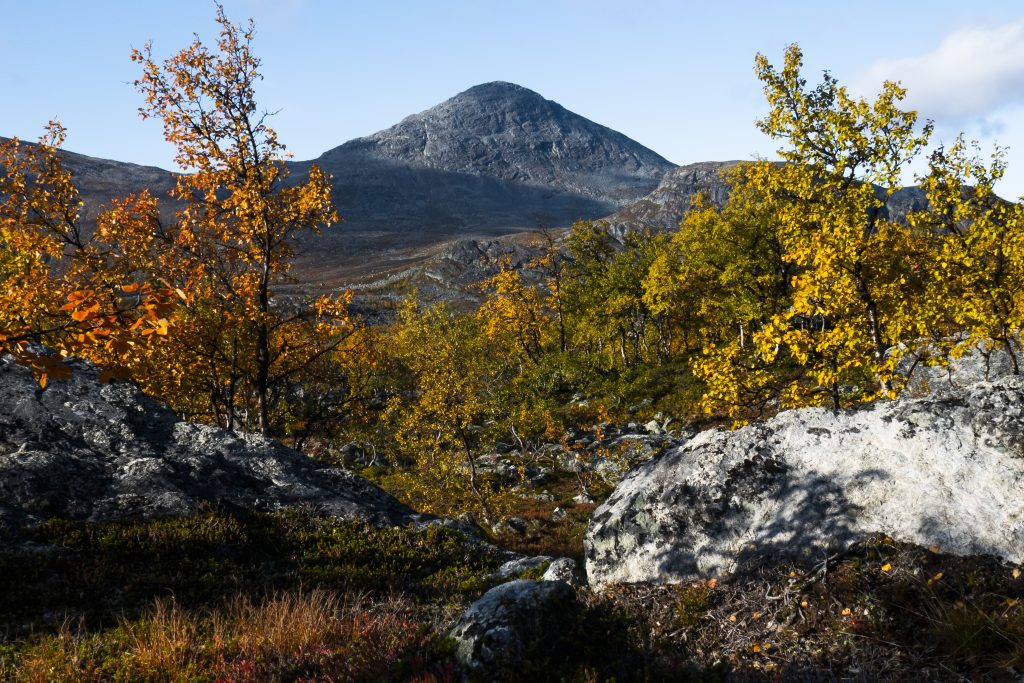
We enter a perfect geographical area where we can practice our knowledge in the map & compass because of the surrounding mountains. Before lunch, our view ahead is drawn to Nijak, Sarek’s gatekeeper, you could say and an imposing mountain with a near vertical side. During the day we also continue with group exercises to get deeper into the understanding of the mountain and for the group’s needs.
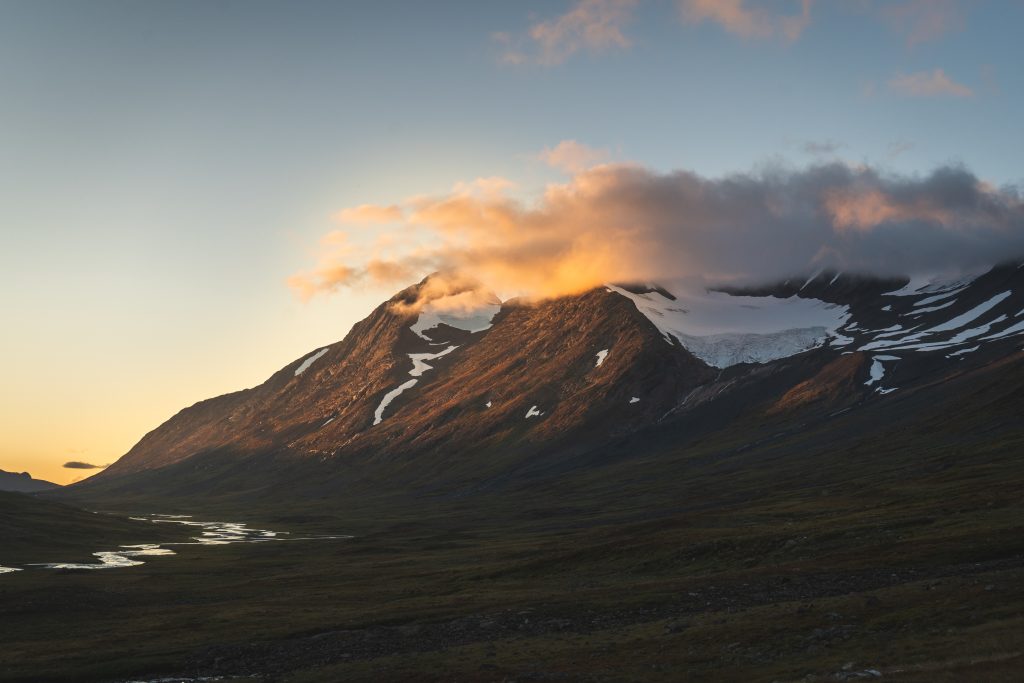
Past Nijak we are in our first valley: Ruohtesvagge. A classic typical example of a u-valley and here we will travel the rest of the day, and tomorrow. If we feel strong towards the evening, there is a little extra opportunity for top ascent to round off, otherwise we enjoy our first night in Sarek and look forward to a day in higher elevation tomorrow!
Day 3
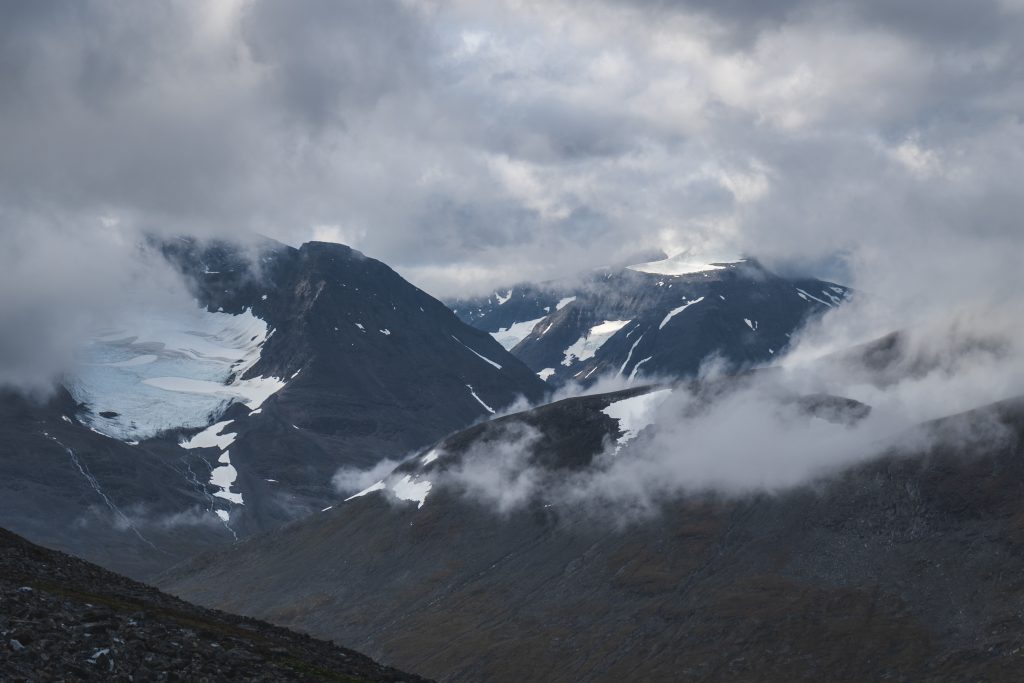
The plan, and the ambition today is for us to get up for a summit attempt as long as the weather permits. In the morning we talk about a couple of options, set the right expectations and goals and after an early breakfast and we leave.
An hour into our hike, we are met by our first challenge, a refreshing water crossing over Smajilajåhkå, here we get the perfect opportunity to go through safe ways to cross streams both by yourself and in a group. We look together for the best place to cross, and once over we fill up with fast energy and move, here begins our ascent. We quickly get warm after the chilly water but we maintain a steady calm pace on the way up.
If the weather conditions are clear we are met with fantastic views, and we stay as long as we want, of course with mandatory group pictures.
The way down takes with the right technique almost as long as up, and we also discuss here the right techniques to save our energy and joints. Once in the valley, our journey continues until the end of Ruohtesvagge, and we arrive at our camp site: Skarja.
Day 4
A proper breakfast and morning of reflections on the days so far, we go through what we learned, and what we want to accomplish during the trip. Today will be a slightly lighter day when the distance will not be as long, and the terrain is flatter. From Skarja, the legendary Rapa Valley, with Rapaädno in the bottom, begins below our path that goes east. If we are lucky with the weather, we can enjoy our lunch up on a small knall in the middle of the valley. We continue to talk about mountain safety, how we should act in different scenarios and how we can make the best decisions based on where we are and where we will end up. You will learn the basics of energy efficiency where the goal is to keep as much energy as possible at the end of the day but also at the end of the trip. You get an understanding of how each decision escalates forward and affects the whole journey.
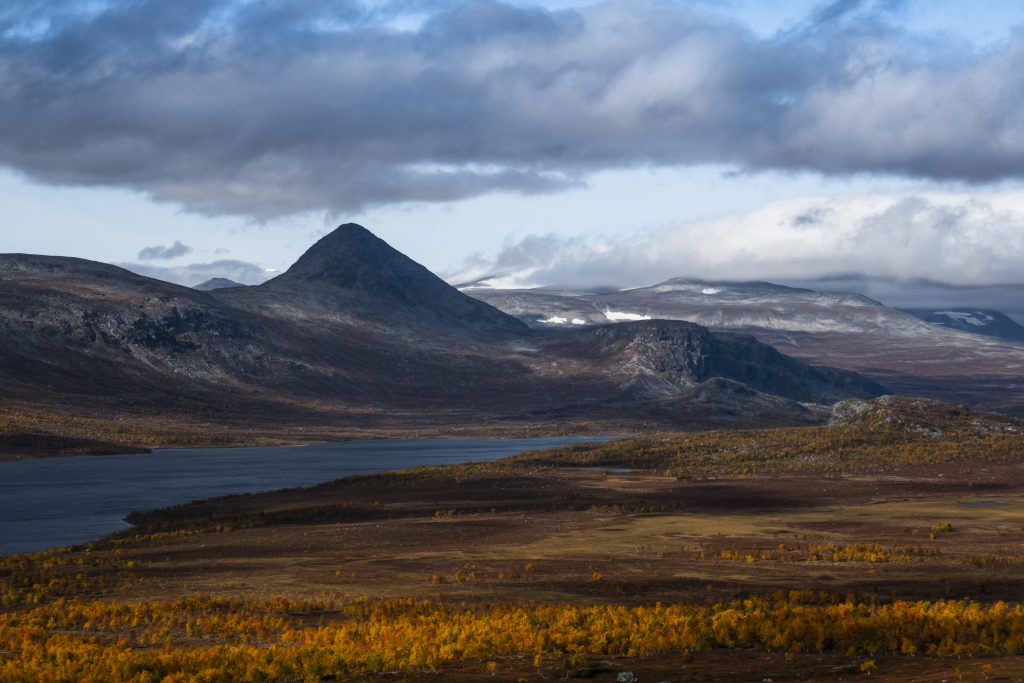
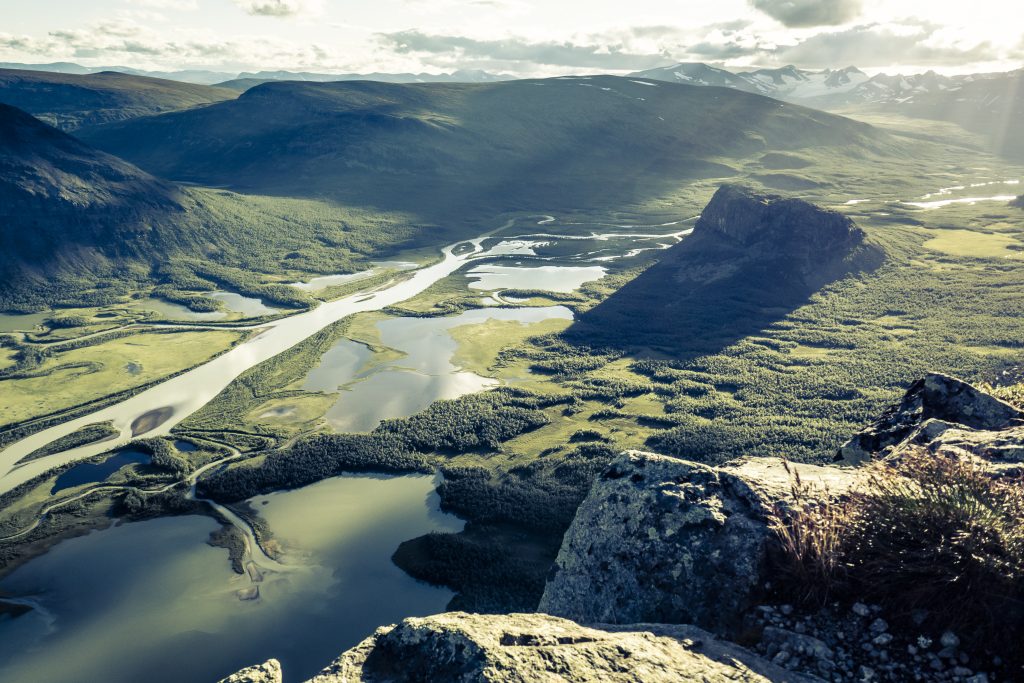
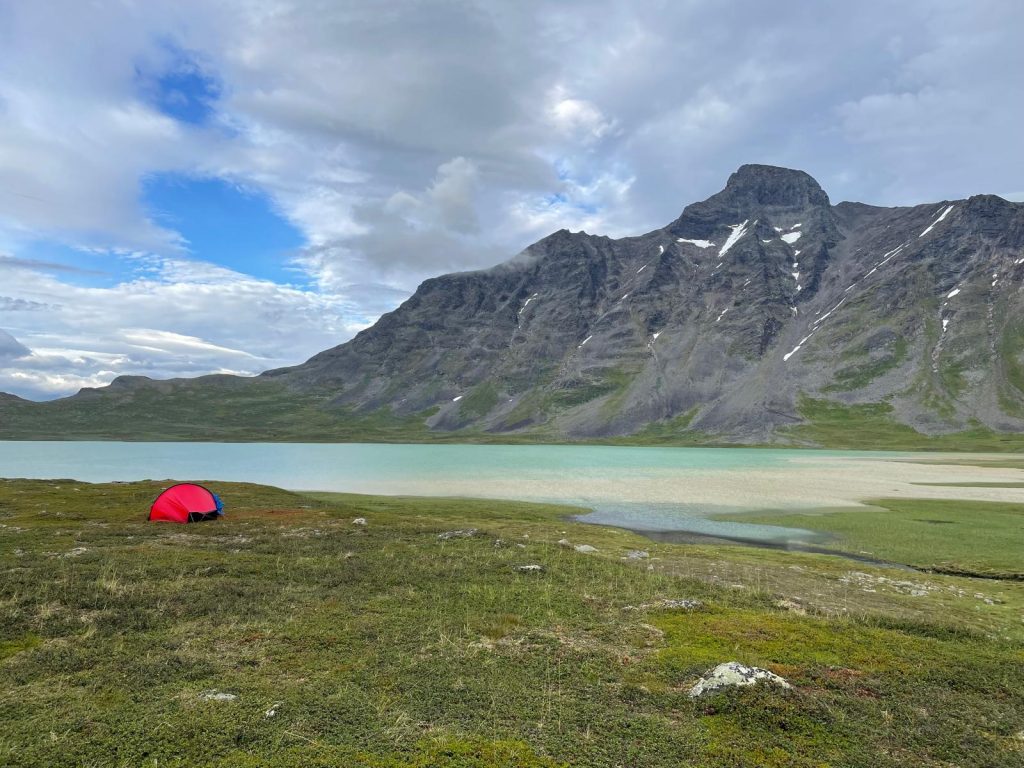
Bierikjaure is of the more beautiful kind of glacier lakes with a distinct turquoise tone, and over the lake Bierikpakte dominates, with its western wall which is one of Sweden’s toughest climbing trails. Our path turns north and we have now made a half circle around the whole of Sarektjåkkå massif. The goal for the day is Guhkesvagge and before we are there we have some challenges and beautiful surprises.
Day X
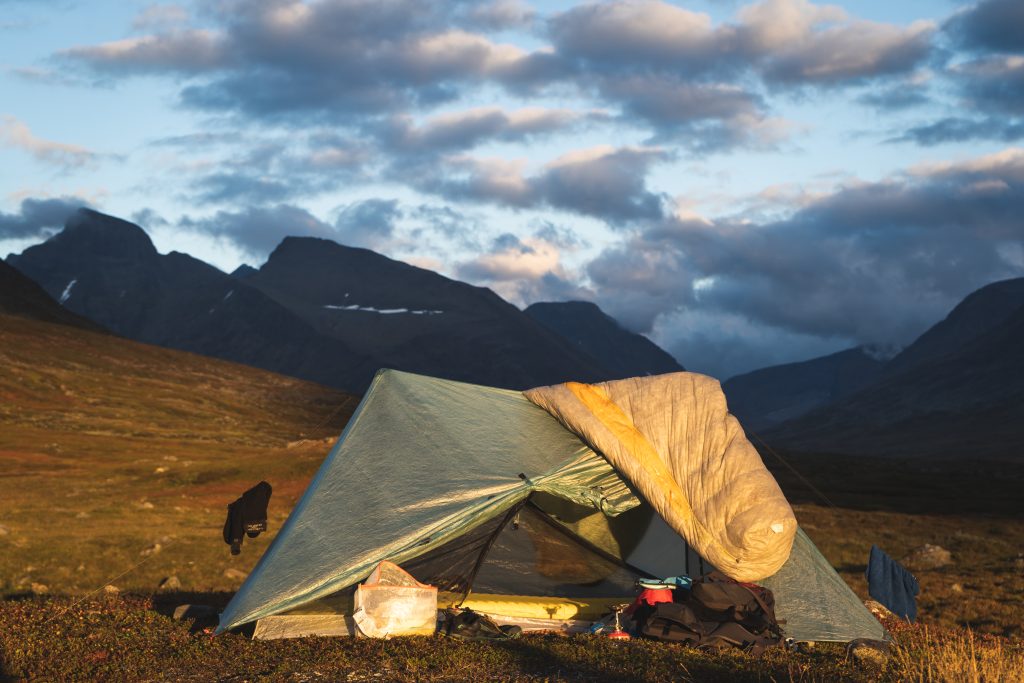
One of the best aspects of this tour is the flexible approach. We have the opportunity to adapt to the weather and the status of the group. Our rest day can thus be placed based on what is appropriate, it may be during day 3, 4 or 5, hence “x”.
However, rest does not mean that we do nothing, we can move the camp a shorter distance, and use the time to immerse ourselves in the mountains, ourselves and have good fellowship, spend longer with lunch and dinner and enjoy Sarek and the neighborhood we can explore.
Day 6
Per routine we have morning meeting to have awareness of the status of the group and today’s agenda. After a steady breakfast, we cross the bridge at Niendo. From Guhkesvagge we move northeast with a view to the sacred mountain Slugga, which we can already see from morning onwards.
The day will be concentrated in hiking technique and what we need to think about in a little more challenging terrain. Here it becomes important that we look after each other, and set a sustainable pace. Here you will also have the opportunity to practice “micro navigation” in the varied terrain. Here is a good opportunity to make many small decisions and get quick results.
After lunch in the foot of the mountain when we have filled up properly with energy, a climb begins, because now we will cross the saddle between Slugga and neighbor Gähpo. The terrain is rocky, but it is not too many altitude meters, and well on the other side we have a brand new, wonderful view, and a long downhill to take on.
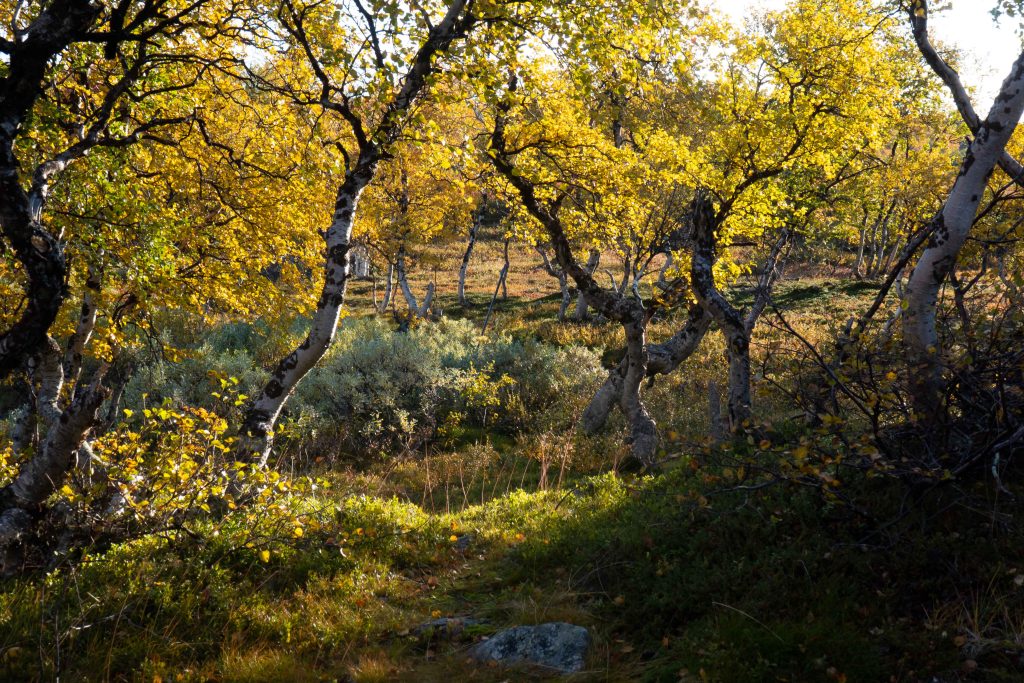
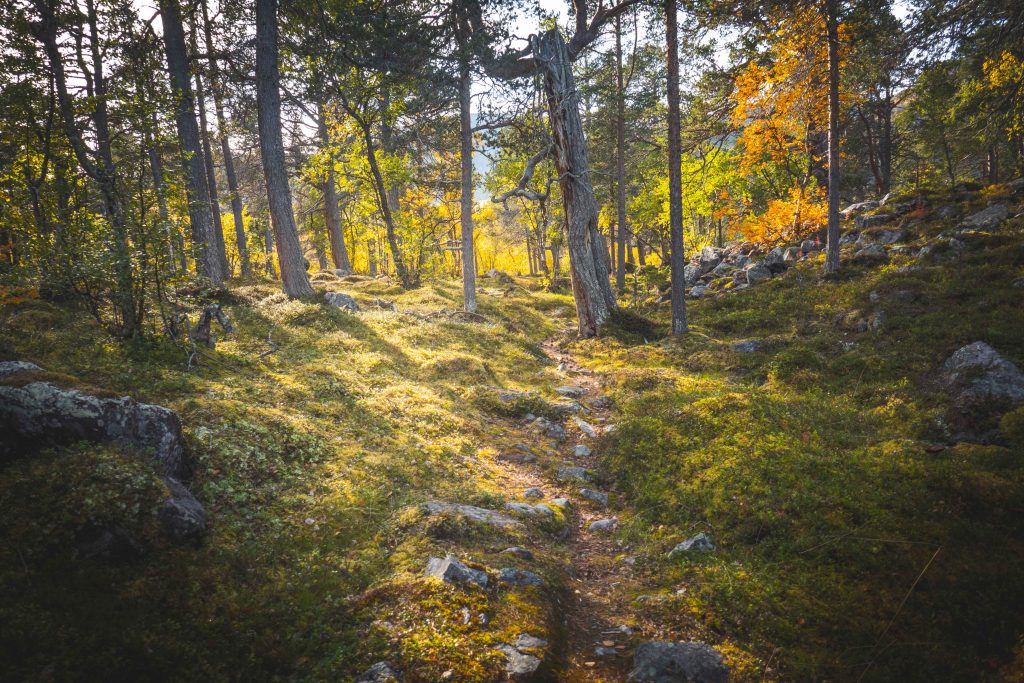
The goal for the day is a small land tongue just on the other side of a stream we need to cross. Here in the lush idyllic birch forest with mossy blankets we pitch the tents and make evening for day 6.
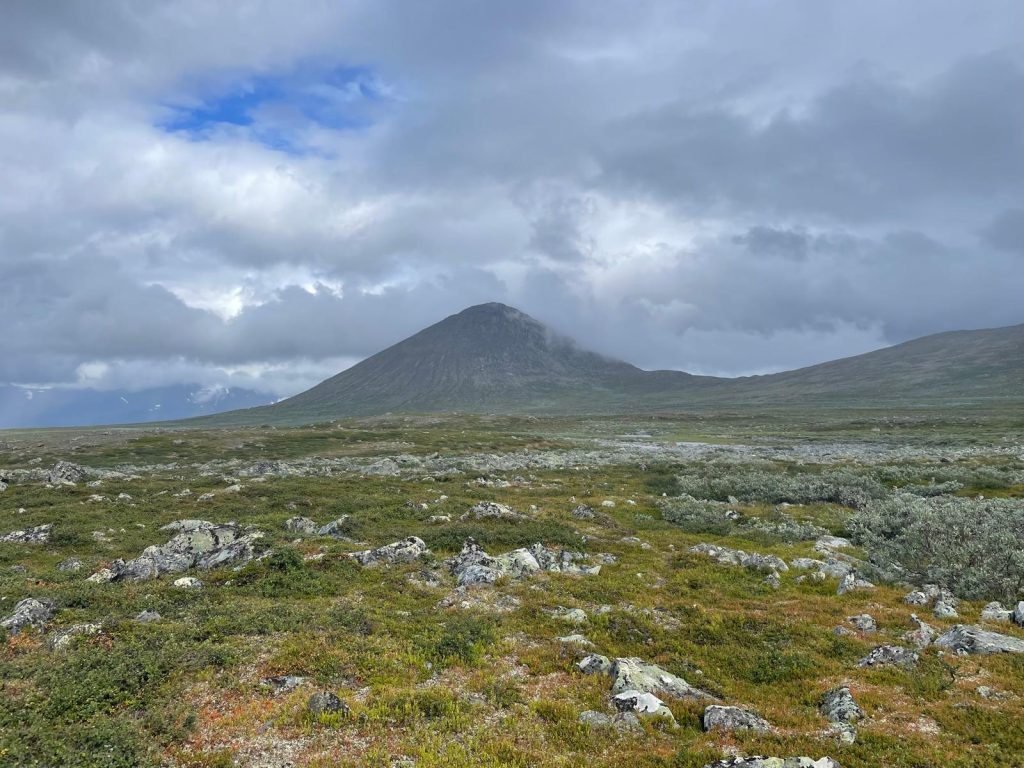
Day 7
On the last day we start with a slightly longer meeting to evaluate our current situation and the goal is to understand the newfound security, why it has arisen and how we can carry with us that feeling and our new knowledge going forward in life.
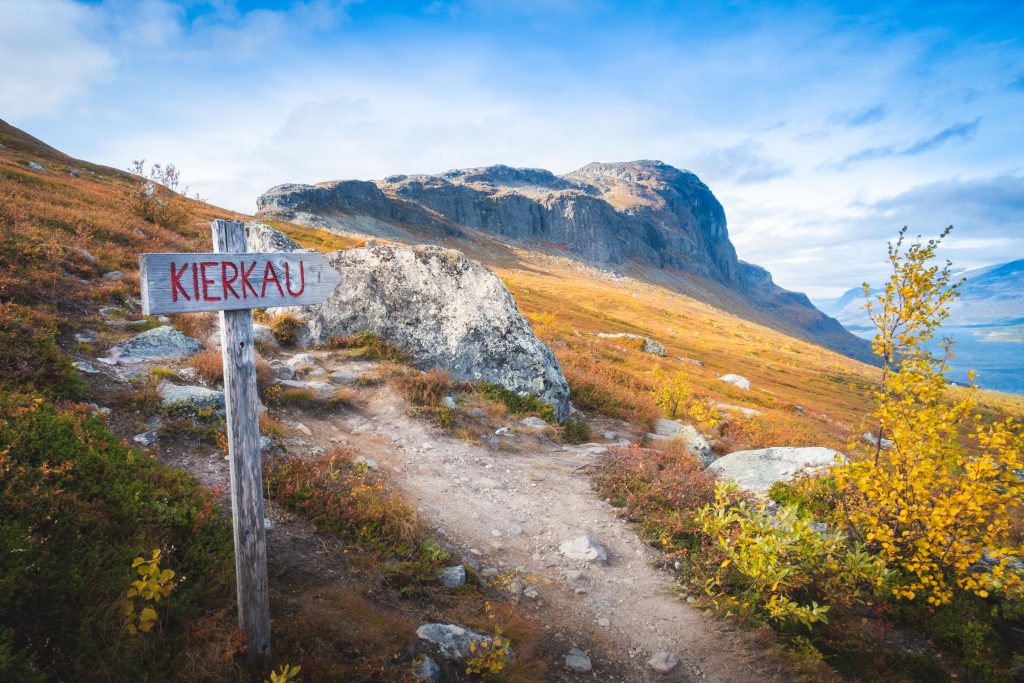
After breakfast we take aim at Lulep Kierkau, our last mountain for this expedition. The road takes us over marshes, mountain pastures and in a kind slope further upwards, and we cross the back and top of the mountain for a final summit. Here we can also take the opportunity to write in the summit book, and if the weather allows to enjoy the view and some snacks.
At this point, we have formed a group that works both together, where each individual has become safer in themselves and with making decisions individually and in groups. Changing external circumstances have become more predictable and manageable. You understand the decision-making processes that happen inside every day and every minute of the trip. This is the end of the beginning of your way to a richer life to the mountains, and you feel pride in yourself with what you have just been through.
The last bit down to the mountain station Saltoluokta is satisfying and fun in varying path down the mountain. When we arrive, we take one last group picture, accommodate ourselves in the rooms and enjoy fantastic cooking in the large dining room, listen to coffee speeches and round off the evening along with memories and newfound community.
Sarek is a bubble of its own in a larger outer mountain world, and now you have brought a piece of that bubble, which will always stay with you. The expedition ends in Saltoluokta and of course you can choose to stay. Here we say goodbyes and thank each other for our time together.
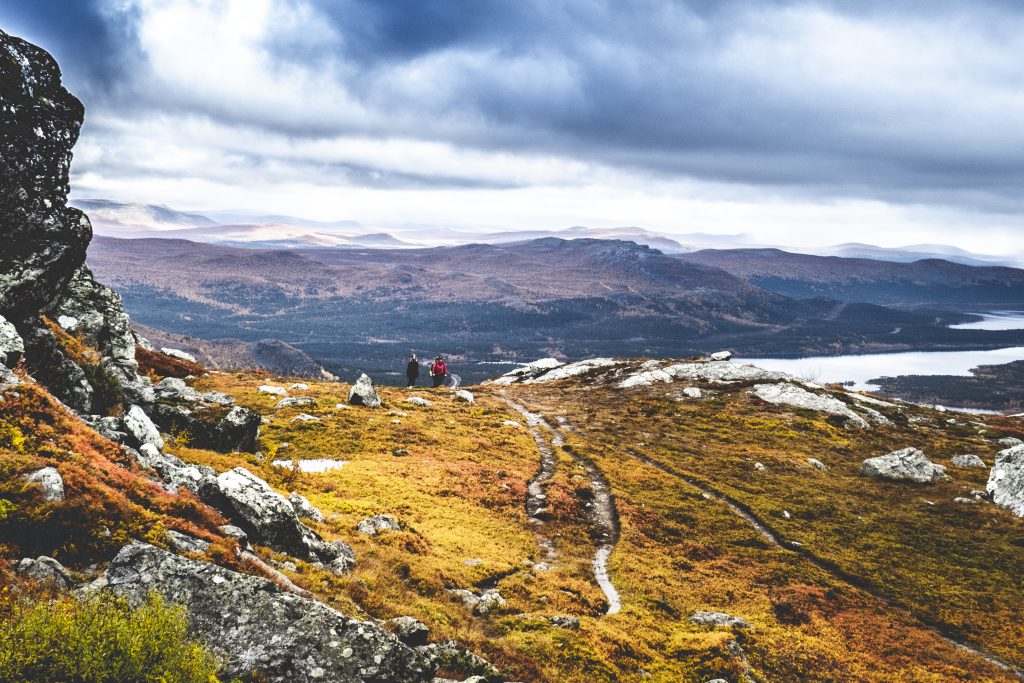
*Please note that planning may change both before and during the trip based on the current conditions*
Creating good conditions for the trip
This trip suits you that have mountainhiked before and wants to take the next step, as well as more experienced, who longs out for adventure and who wants to learn more about the mountains and grow as a person and as an independent adventurer. You need to be able to hike in varied terrain and be able to handle some height meters over a week of backpacking. If you’ve tried wading, it’s a big plus. If you want a customized training plan for preparatory purposes, you are welcome to contact me about it.
Foodplanning:
- We will have dinner and breakfast last night / morning at STF Saltoluokta but for day 1-7 you need to have all the other food with yourself.
– 6x breakfast
– 7x lunch
– 6x dinner
– Lots of snacks
If you need to rent equipment, I recommend Outdoorbuddies and this can be done in consultation with me if you wish. I live next door to them so for such equipment you do not need before the trip starts you do not have to think about shipping.
If you have boots, make sure they are properly walked in and waxed and if you have new socks, make sure that they feel good to walk with as well. Remember that feet swell slightly after you have walked for a while.
After booking, you will receive an invitation to digital meeting for the tour that will be held in early August.
Practical information and whats included
Getting to the start: (Ritsem)
The easiest option is train or bus to Gällivare, then Bus all the way to Ritsem. If you take a car, it is advisable to park at Kebnats, and take the same bus from there.
Included:
- Experienced guide 7 days
- 7 days of experience in the mountains with lots of educational content about:
– Trip planning
– Map & compass, navigation
– Hiking technique & summiting technique
– Finding campsite & tent pitching
– Weather
– Terrain/ Landscape
– Sami culture & reindeers
– History of Laponia
– Decisionmaking in the mountains
– Camplife
– What creates safety
– How to create experiences to remember - Full board at STF Saltoluokta last day incl accommodation, dinner & breakfast
- Professional photographer
- Digital pre-trip meeting
- Unlimited email support
Not included:
- Food & drink in addition to STF Saltoluokta
- Extra drinks & alcohol at dinner
- Own equipment
- Travel insurance
- Travel to and from Ritsem / Saltoluokta
Required skills
- No prior knowledge / technical competence needed
- You should have a sufficient level of fitness, you need to be able to walk with a pack up to 20 kilometers in elevated terrain over 7 days.
- Fluent in English / Swedish
Equipment / Packlist
Things you need to bring:
- Backpack 45-70L~
- Tent (Can be shared with group and rented at Outdoorbuddies)
- Sleeping bag for about 0°c. (T-limit / Women’s comfort)
- Sleepingpad, with R-value 3+
- Outdoor stove with fuel
- Spoon / Spork
- Foodcup / Kettle
- Waterbottle (1L minimum)
- Small first aid kit
- Repairkit
- Hiking poles
- Comfortable shoes / boots for rugged terrain
- Windproof jacket (jacket thats both wind & waterproof is Ok)
- Waterproof jacket (jacket thats both wind & waterproof is Ok)
- Warmer layer (down jacket or thick fleece)
- Baselayer – (Wool / Synthetic NO Cotton
- Buff / neck gaiter
- Extra socks
- Hat
- Gloves
- Shades + SPF
- Phone
- Toiletpaper
- Food & Snacks
Things good to have:
- Waterproof gloves / overmitts
- Separate baselayer for sleeping
- Sittingpad in cellfoam
- Mini towel
- Cap
- Cup
- Hygiene items
- Map & Compass
- Headtorch + batteries
- Powerbank
- Insect deterrent & headnet
- Trash bags
- Trowel (google)
Where is your next adventure? Find it on the map!
Core values
Personal & Developing Adventures
Experiences that are carefully designed with intimate groups provide the greatest possible development for your independence
Foresight & Reliability
Clarity is crucial and the goal is for you to have to ask as little as possible. Well thought out planning with solid knowledge & training in the background for your safety.
Real & holistic sustainability
We respect local culture, cooperate with selected partners and leave minimal footprints from door to door.
Community & Adventure
We create amazing memories for life together with a balance between challenge and joy. Great focus on added value and where the needs of the group are always central to the experience.
Travel garuantee for your
economic safety