Sapmi, my philosophy and guiding activities in the Land of the Sámi.
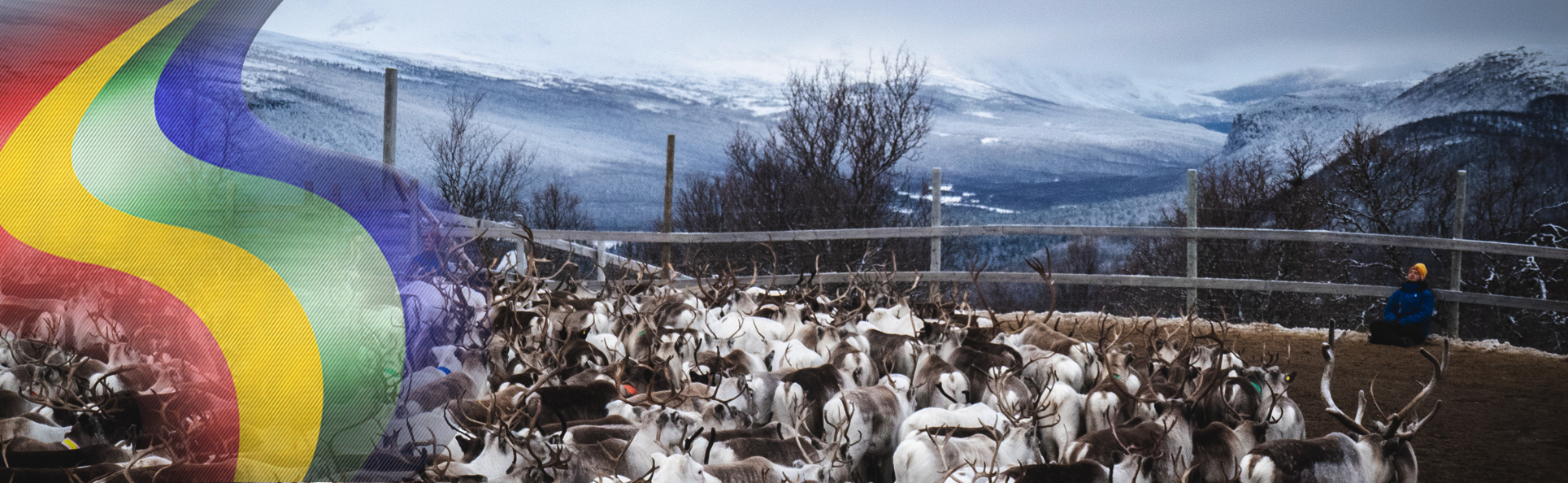
When we move in the mountains, we should constantly remember that we are in a living cultural landscape, where people and animals have coexisted for millennia. Sápmi is not only a wilderness for recreation and adventure, but also the home and workplace of the Sami people and their reindeer. Here, ecosystems, culture and industries are intertwined in a way that requires caution and understanding.
Tourism in Sápmi has grown significantly in recent decades, and with it both opportunities and challenges have arisen. Many visitors seek out the mountains to experience the magnificent nature, tranquility and freedom. But what for us can be a temporary experience is for the Sami villages an everyday life, a place where reindeer husbandry lasts all year round and where the welfare of animals depends on respect for the land and their gracing routes.
One of the main conflicts of interest is about access to land and how it is used. Reindeer industry is a traditional industry based on long-term, balance and reindeer herders’ deep knowledge of the rhythm of nature. The reindeer needs undisturbed pastures and free moving routes to be able to follow its ancient patterns. At the same time, the mountain world attracts more and more visitors – from skiers and snowmobile drivers to hikers and climbers – which can lead to disruptions in the natural behavior of reindeer.
Another aspect is cultural sustainability. Tourism has a great potential to highlight and strengthen Sami culture through genuine experiences and knowledge transfer, but if it does not take place in collaboration with the Sami, it risks instead eroding and commercializing a living tradition. Using Sami symbols and expressions without understanding or consultation is problematic, and it is important that tourism development takes place on the conditions of the Sami communities.
For a company that works in mountain guidance, it is therefore crucial to work with great respect for both the landscape and the people who have their business here. Sustainable tourism means that we adapt our tours to minimize disturbance, keep ourselves updated on reindeer herding areas and pastures, and keep a dialogue with the Sami villages about how we can best agree on the mountains. It also means that I educate my guests about the Sámi culture and the importance of reindeer husbandry, so that their experience becomes one where knowledge and understanding go hand in hand with the adventure.
I have chosen life as a guide in the mountain world, not only as a profession but as a way to become part of this ecosystem. It means an obligation to understand and respect the natural and cultural contexts I operate in. It’s about reading the landscape, listening to those who have lived here for generations and to guide people in a way that doesn’t leave a trace – other than in their hearts. Choosing this life has also meant sacrifices. It is a life that requires me to adapt to the conditions of nature rather than the other way around. It means prioritizing simplicity over convenience, living with uncertainty rather than stability, and sometimes opting out of opportunities in other parts of the world in order to operate here, where I feel I belong.
By combining our love for the mountains with a genuine consideration for those who live and work here, we can create a tourism that is not only sustainable for nature, but also for the culture and traditional industries. Sápmi is a treasure to nurture, not a resource to consume. We all have a responsibility to ensure that the mountains remain alive – both for the generations of today and for those who come after us.